

What is Artificial Intelligence?
Artificial Intelligence (AI) is a technology that allows machines to mimic human intelligence. It helps computers, robots, and software learn from data, solve problems, make decisions, and even understand languages. Today, AI is already being used in smartphones, social media, online shopping, and healthcare. But this is just the beginning.

Why Everyone is Talking About AI
In the last few years, AI has grown very fast. Big companies like Google, Apple, Amazon, and Microsoft are investing heavily in this technology. It is changing how we work, learn, and even think.
People are interested in AI because it is not only powerful but also growing smarter every day. It is expected that AI will soon be part of almost every job and industry.
How AI Works (In Simple Words)
AI works by collecting huge amounts of data, learning patterns from it, and then using this knowledge to make decisions or predictions. The brain of AI is made up of algorithms – step-by-step instructions that help it solve problems.
For example, when you search something on Google or when YouTube recommends videos – that’s AI in action.
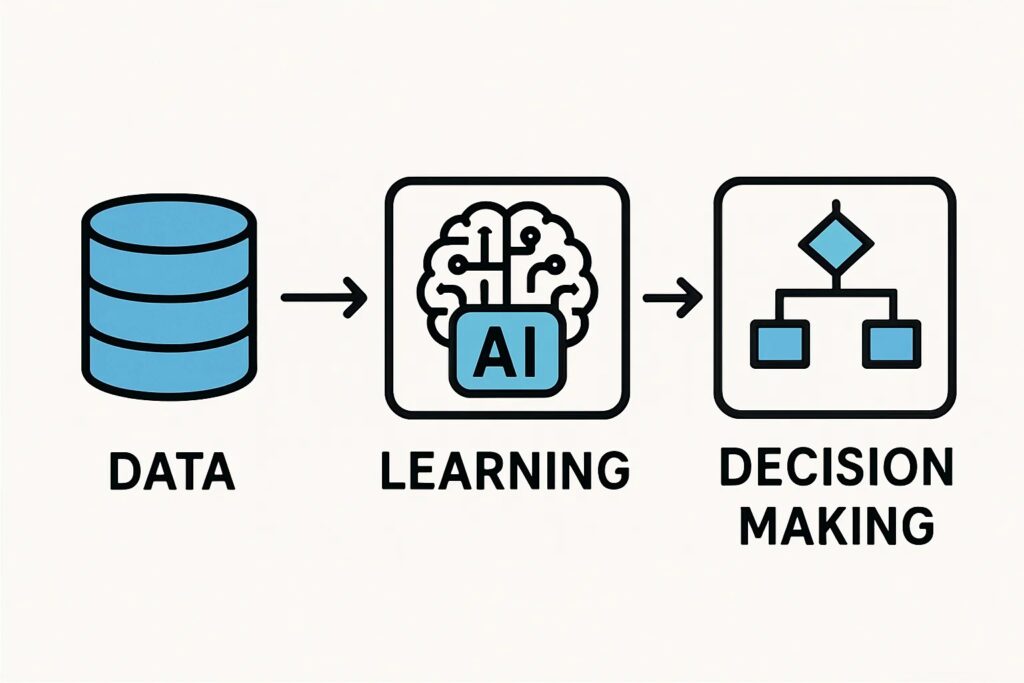
AI in Daily Life: Things You Already Use
You might not even realize that you’re using AI every day. Some examples include:
- Voice assistants like Siri or Alexa
- Face recognition on phones
- Google Maps traffic updates
- Netflix and YouTube recommendations
- Chatbots in websites and apps
These are all powered by AI working in the background to make your life easier.
AI in Education
The future of education will involve AI in many ways. Smart learning apps will guide students based on their speed and style of learning. Teachers will use AI to track student progress and suggest improvements.
There will be more personalized content, real-time feedback, and intelligent tutoring systems helping students anytime, anywhere.

AI in Healthcare
AI is already saving lives in hospitals. It helps doctors detect diseases early by reading X-rays and scans faster and more accurately than humans.
Soon, AI will help in surgeries, give health advice through apps, and even remind patients to take their medicines. AI-powered diagnostics will reduce human error and provide better care.
Jobs and AI: What Will Change?
This is one area where people are both excited and worried. AI will definitely change how we work. Some jobs will be lost, especially those that involve repetitive tasks. But many new jobs will be created that require people to manage, train, and work alongside AI.
Jobs in AI development, data analysis, robot management, and ethics are already growing fast. So, the future is not about job loss, but job shift.
AI and Creativity: Can Machines Be Artists?
Yes, AI is now being used to create music, write stories, and even paint pictures. Tools like ChatGPT and DALL·E can produce creative content that sometimes surprises even experts.
However, human creativity is still unique. AI can assist artists but can’t fully replace human imagination, emotions, and experience.

he Role of AI in Smart Cities
AI is helping cities become smarter. From traffic management to waste control, AI can improve city planning and make urban life more comfortable. In the future, AI will run public transport, lighting, safety systems, and even energy usage in smart homes.
Imagine living in a city where everything runs smoothly without delays or confusion – that’s the power of AI.
Is AI Dangerous? What Are the Risks?
While AI brings many benefits, it also has some risks. The biggest fear is that if AI becomes too powerful and is not controlled properly, it might make decisions that harm humans.
Other concerns include privacy, data misuse, and fake content (like deepfakes). That’s why AI ethics and rules are very important. We need to use AI wisely and always keep humans in control.
AI and Human Emotions: Can Robots Feel?
AI can understand human emotions using facial expressions, voice tone, and words. But it does not feel emotions the way humans do. Some robots may act friendly or sad, but it’s just programming.
In the future, we might see more emotionally intelligent AI, but feelings and empathy are still human traits that machines cannot fully copy.
The Future of AI in 5–10 Years
AI will continue to grow. Here are some expected changes:
- Self-driving cars will become more common.
- Virtual teachers and doctors will be available in rural areas.
- AI-powered assistants will help in legal, finance, and government tasks.
- Robots will help in construction, farming, and security.
- Personalized AI companions may become part of daily life.
The key is that AI will be everywhere but in a helpful way.
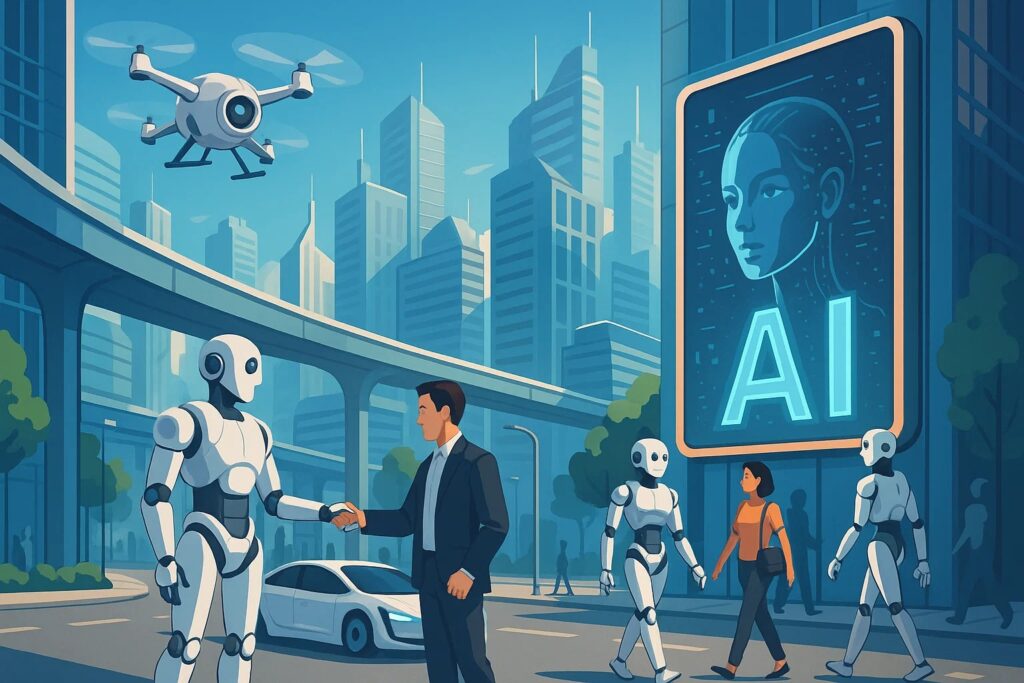
Should We Be Afraid of AI?
No, we should not fear AI – we should learn about it. Understanding how AI works and how it helps society is important. With proper laws, transparency, and human control, AI can be our greatest tool.
Fear often comes from lack of information. So, instead of worrying, we should educate ourselves and prepare for an AI-powered future.
How to Start Learning About AI
If you’re curious about AI and want to learn more, start with the basics. You can explore:
- Free online courses (Coursera, edX, Khan Academy)
- AI videos on YouTube
- Books and podcasts
- Tools like ChatGPT to experiment and learn
The more you know, the better you’ll be prepared for the future.
AI Tools We Use Every Day
-
ChatGPT → 👉 https://chat.openai.com
-
Grammarly → 👉 https://www.grammarly.com
-
Google Assistant → 👉 https://assistant.google.com
Conclusion: Our Future with AI
Artificial Intelligence is not science fiction anymore – it’s real, and it’s changing the world fast. From helping in daily tasks to solving complex global issues, AI has the potential to improve every part of life.
But with great power comes great responsibility. The future of AI depends on how we choose to build and use it. If done right, AI will make our lives better, smarter, and more connected than ever before.