
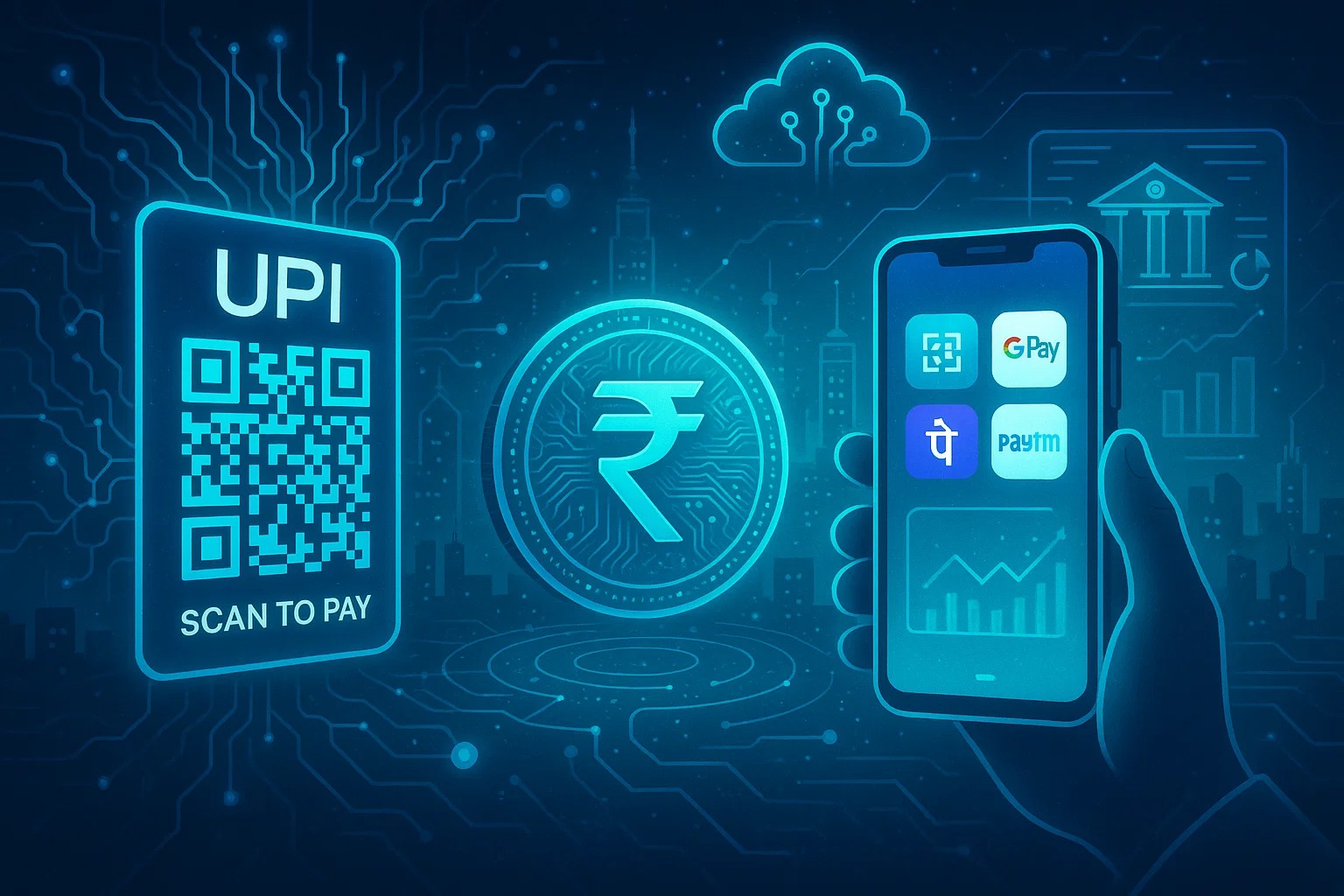
Banking in India has gone through a massive transformation over the last decade. From standing in long queues at bank branches to making instant UPI payments with a few taps, the Indian financial system has become one of the fastest digital adopters in the world. By 2025 and beyond, digital banking in India is expected to redefine not just how people transact but also how they save, borrow, and invest.
This article explores how UPI, AI, blockchain, digital lending, and cybersecurity are shaping the future of banking in India, along with opportunities and challenges for the economy.
The Rise of UPI: India’s Digital Revolution
When the Unified Payments Interface (UPI) was launched in 2016 by the National Payments Corporation of India (NPCI), few could have predicted its explosive growth. Today, India witnesses billions of monthly transactions on UPI, making it the backbone of digital payments.
By 2025, UPI is expected to:
-
Enable cross-border payments, connecting India to global financial networks.
-
Integrate with credit products, allowing people to access small loans directly through UPI apps.
-
Strengthen merchant adoption, even in rural areas, through low-cost QR-based solutions.
UPI is not just a payment system—it is becoming the foundation of India’s digital economy.
Artificial Intelligence (AI) in Banking
AI-powered banking is already here. From chatbots that answer customer queries to AI-driven fraud detection systems, banks are using artificial intelligence to cut costs, improve efficiency, and enhance customer experience.
By 2025, AI in banking will:
-
Offer hyper-personalized financial advice using data analytics.
-
Detect fraudulent transactions within seconds by analyzing patterns.
-
Automate back-office operations like document verification, loan approvals, and compliance checks.
-
Enable voice banking, where customers can complete transactions using voice commands in regional languages.
This makes banking not only faster but also more inclusive for people who may not be digitally literate.
Blockchain and Digital Rupee
Blockchain technology is one of the most disruptive forces in banking. While cryptocurrencies are restricted in India, blockchain has found wide acceptance in backend operations, supply chain finance, and cross-border settlements.
One of the biggest changes will come from the Central Bank Digital Currency (CBDC), or the Digital Rupee, launched by the Reserve Bank of India (RBI).
Benefits of the Digital Rupee include:
-
Faster transactions compared to traditional NEFT/RTGS.
-
Reduced dependency on cash handling.
-
Enhanced transparency and security in payments.
-
Potential use in government subsidies and welfare schemes for direct benefit transfers (DBT).
By 2025, the Digital Rupee may coexist with UPI, creating a hybrid digital ecosystem.
Digital Lending and Neobanks
The traditional loan process—filled with paperwork, long approvals, and collateral requirements—is being replaced by digital lending platforms. Startups and fintechs are using AI and alternative data (such as mobile usage, payment history, and even social media activity) to assess creditworthiness.
This has opened doors for millions of underserved Indians who previously had no access to credit.
Meanwhile, neobanks—digital-only banks with no physical branches—are gaining momentum. They offer services like:
-
Instant account opening,
-
Seamless fund transfers,
-
Expense tracking,
-
Investment options.
By 2025, neobanks could challenge traditional banks by offering low-cost, customer-centric services.
Cybersecurity Challenges in Digital Banking
With great digital adoption comes great risk. Cybersecurity in banking is one of the biggest concerns for 2025. Threats include:
-
Phishing scams that trick users into sharing personal data.
-
Ransomware attacks on bank servers.
-
Identity theft from weak password practices.
-
Fraudulent loan applications using stolen Aadhaar and PAN details.
To counter these, banks are adopting:
-
Biometric authentication (fingerprint, retina scan, facial recognition).
-
AI-based fraud detection systems.
-
End-to-end encryption of digital transactions.
-
Zero-trust security models for networks.
Cybersecurity will remain a non-negotiable investment for Indian banks.
Financial Inclusion: Reaching Rural India
One of the most powerful impacts of digital banking is its ability to bring financial inclusion to rural India. With over 600 million smartphone users and increasing internet penetration, banking services are reaching previously unbanked populations.
UPI, Aadhaar-enabled payments, and Jan Dhan accounts have already opened doors for rural customers. By 2025, digital banking will ensure:
-
Farmers can receive subsidies directly into bank accounts.
-
Microloans are easily accessible for small businesses.
-
Digital wallets replace cash in rural economies.
-
Women entrepreneurs can access banking services without depending on middlemen.
This shift will boost India’s GDP by empowering rural economies.
The Role of Regulations and Government
The Indian government and RBI are playing a central role in shaping the future of banking. Key regulatory moves include:
-
Data Protection Bill to safeguard user privacy.
-
KYC (Know Your Customer) modernization, making it fully digital.
-
Fintech regulations to protect consumers from fraud.
-
Partnerships between banks and fintechs under regulatory sandboxes.
Such measures will help balance innovation and safety in the banking sector.
Opportunities Ahead
The digital banking revolution is not just about technology—it’s about creating opportunities. By 2025:
-
The Indian digital payments market is projected to cross $1 trillion.
-
Fintech startups will drive innovation, creating millions of jobs.
-
Banks will shift from being transaction providers to financial lifestyle partners.
-
India could become a global model for low-cost, scalable digital banking.
Conclusion
The future of digital banking in India is bright, bold, and transformative. With UPI, AI, blockchain, digital lending, and strong cybersecurity, India is set to redefine global banking standards.
By 2025, banking will no longer be about visiting branches—it will be about having a bank in your pocket. From rural farmers to global corporations, everyone will benefit from this inclusive, technology-driven revolution.
India has already shown the world how to innovate at scale. The next few years will only cement its position as a leader in digital finance.